Why Sewer Line Slope Makes or Breaks Your Septic System
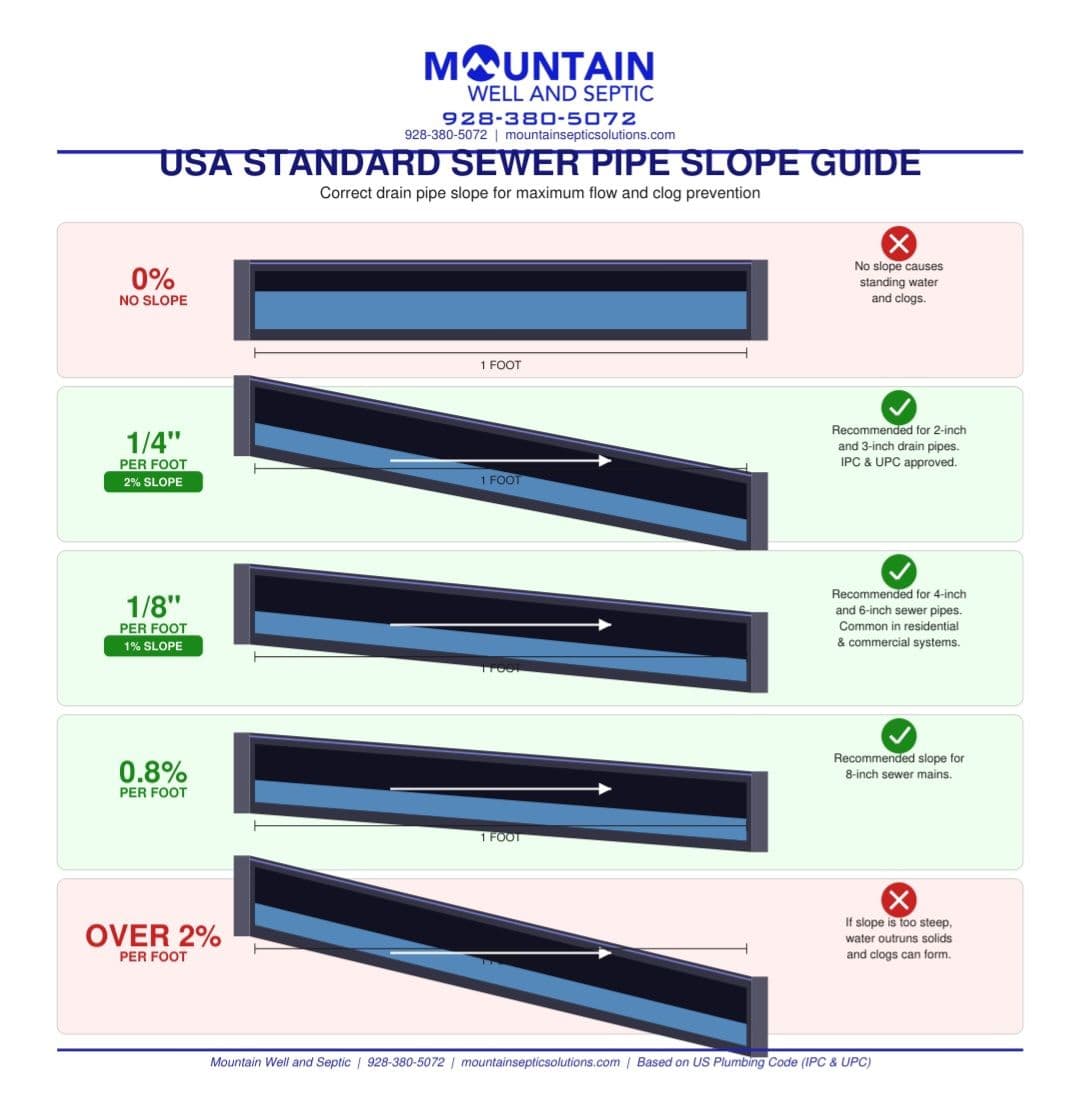
One of the most common questions we get is why a septic system has to be installed relatively close to the house. The short answer - sewer line slope. It sounds like a small detail, but it has a huge impact on whether your system works the way it should, day in and day out.
Here's the thing about slope: there's a sweet spot, and it's not very wide. Too flat - like zero slope - and waste just sits in the pipe. Standing water, clogs, backups. Not what anyone wants. Too steep - anything over 2% - and you run into a different problem. The liquid moves so fast it actually outruns the solids. That leaves material behind in the pipe, and over time, that causes serious issues.
The ideal range falls between 1/8 inch and 1/4 inch of drop per foot of pipe, depending on the pipe diameter. For most residential systems using 4-inch or 6-inch sewer pipe, 1/8 inch per foot - or a 1% slope - is the standard. Smaller 2-inch and 3-inch drain lines typically call for 1/4 inch per foot. These aren't arbitrary numbers. They're based on US Plumbing Code and exist because that specific fall keeps everything moving together - liquid and solids at the same pace.
This is exactly why septic placement matters so much during the design phase. The further the tank sits from the house, the more elevation change we have to work with - and in some cases, work around. Getting the grade right from the very start is one of the things we pay close attention to on every septic installation we do.
If you've ever wondered whether your current setup is sloped correctly, or if you're planning a new build and trying to figure out where your system should go, this is a great conversation to have early. Layout decisions made upfront save a lot of headaches down the road.