New Rural Property Gets a Full-Scale Custom Field Installation
Rural septic work is its own animal. You're not dealing with soft suburban soil and flat lots - you're working with rocky ground, tough terrain, and layouts that require real planning before a single trench gets cut. That's exactly the kind of job we do best.
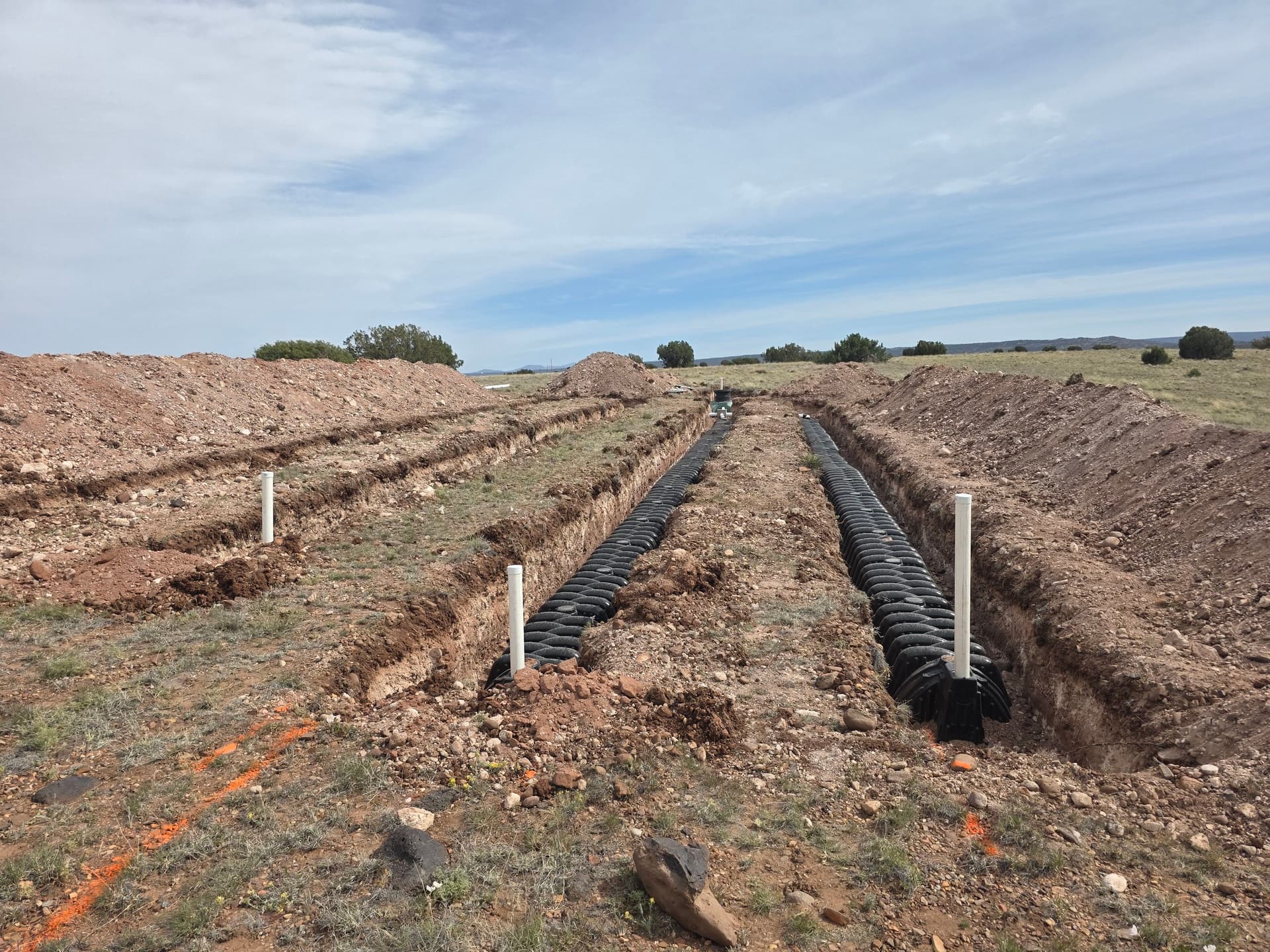
Here's what a properly installed leach field looks like mid-process. Two parallel trenches cut clean and level through hard, rocky high-desert soil. Each one holds corrugated drain field chambers laid end-to-end and wrapped in geotextile fabric to protect against soil intrusion. The inspection ports - those white PVC stubs sticking up from the field - are placed at the ends of each run so the system can be monitored and serviced down the road.
Getting this right matters more than most people realize. A leach field that's improperly sized, poorly graded, or installed in the wrong soil conditions won't just fail - it'll fail expensively. We account for soil percolation rates, setback requirements, and proper depth before the excavator ever breaks ground.
For properties that are off-grid or just too far out for municipal sewer connections, a well-designed septic system is the foundation everything else is built on. We've done enough of these installs in tough terrain to know that cutting corners early almost always costs the property owner later. That's not how we operate.
Every install we do starts with an open trench and ends with a system built to perform for decades. Rocky ground, remote sites, challenging grades - that's our normal. We know how to get it done right the first time.